
Chinese food, what to eat in each city and how to order
The classic dishes of Beijing, Xi'an, Chengdu, Chongqing, Zhangjiajie, Guilin and Shanghai, how to order by phone, spice levels and allergies.
 By Armando Pacheco, who lives in Shanghai ·
Each region of China cooks differently. In the north, wheat rules, with noodles, flatbreads and buns. In Sichuan and Chongqing, chili and the pepper that tingles. In Shanghai, sweet and savoury. This is how each city on your route eats.
What to eat in each city
- Beijing. Peking duck (北京烤鸭), in thin pancakes with scallion and sweet sauce. Half a duck is plenty for two. Also zhajiang noodles (炸酱面) and, in winter, lamb hot pot (涮羊肉).
- Xi'an. Roujiamo (肉夹馍), crisp flatbread filled with braised meat. Lamb soup with bread (羊肉泡馍), where you tear the bread yourself. And liangpi cold noodles (凉皮). The Muslim Quarter is the place to try it all.
- Chengdu. Hot pot (火锅), mapo tofu (麻婆豆腐), kung pao chicken (宫保鸡丁) and dan dan noodles (担担面).
- Chongqing. Its own hot pot, even spicier (重庆火锅), and xiaomian noodles (重庆小面) for breakfast.
- Zhangjiajie. Hunan cooking, with lots of chili. Try the Tujia sanxiaguo pot (三下锅) and smoked pork with dried beans (干豆角蒸腊肉).
- Guilin and Yangshuo. Guilin rice noodles (桂林米粉) and Yangshuo's beer fish (啤酒鱼).
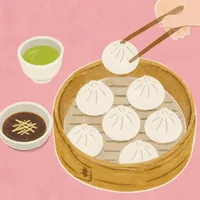
- Shanghai. Xiaolongbao (小笼包), buns with soup inside, pan-fried shengjian (生煎包) and red-braised pork belly (红烧肉).
How to order
- The table code. Many restaurants have a QR code on the table. Scan it with Alipay, see the menu with photos, then order and pay on your phone.
- A menu without photos. Point your translator app's camera at it and read it in your language.
- Pointing. If there is no code, point at menu photos or at dishes on other tables. It always works.
- The bill. Say "maidan" (买单) or pay at the till. There is no tipping.
 Get Alipay ready before you go7 steps with photos, direct download and your progress saved→
Spice
If you do not want spice, say it at the start, "bu yao la" (不要辣). For hot pot, order the yuanyang pot (鸳鸯锅), half spicy and half mild. Sichuan pepper is not hot like chili, it leaves a tingle in your mouth. To cool down, try bingfen (冰粉), a cold jelly with brown sugar.
Allergies and diets
Show the allergy card from the KOI app before you order. It explains your case in Chinese and asks them to tell the chef. There are cards for vegetarians, vegans, coeliacs and allergies to peanuts, shellfish, egg, dairy and sesame.
- Kung pao chicken and many sauces contain peanuts.
- Soy sauce contains wheat, so almost no stir-fry is safe for coeliacs.
- Many vegetable dishes are cooked with meat stock or lard. If you are vegetarian, use the card.
What eating costs
A bowl of noodles in a local shop costs 18 to 25 yuan, about €2 to €3. In a tourist area, the same bowl costs 60 to 80 yuan. Eating at local places, you spend €10 to €15 a day. At restaurants with English menus, €25 to €45. Do not drink tap water, ask for bottled water.
Keep planning your trip
Frequently asked questions
Is it easy to eat without spice?
Yes. In Beijing, Xi'an and Shanghai, very little is spicy. In Chengdu, Chongqing and Zhangjiajie, say "bu yao la" (不要辣) when you order and pick dishes without chili.
What can kids eat?
Xi'an roujiamo, shredded pork in Beijing sauce (京酱肉丝), persimmon cakes (柿子饼) and bingfen. None of them is spicy.
Do I tip?
No. There is no tipping in China.
Is there vegetarian food?
Yes, but many vegetable dishes use meat stock. Use the card in the app to explain.
Guides to plan your trip
What people ask us most, explained calmly.
 When to goBest time to visit China, month by month
 Trip budgetChina trip cost, per day and per route
 Before you goChina plug type, A and I at 220 V
 SafetyIs China safe to visit?
 First tripFirst trip to China, tips and what to know
 Xi'anTerracotta Army, getting there from Xi'an and tickets
 HoneymoonHoneymoon in China
 With kidsChina with kids
 FlightsHow to fly to China